
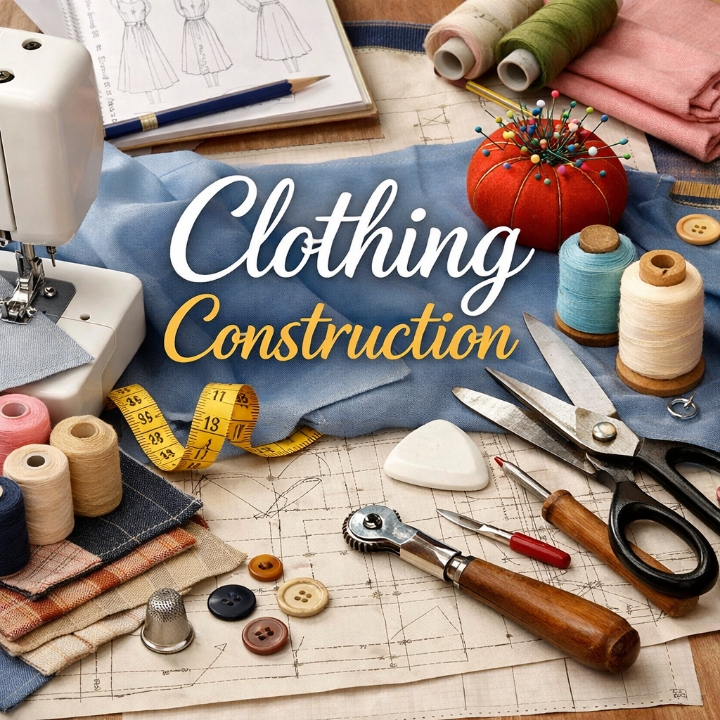
Clothing Construction
Clothing construction is the process of transforming fabric into finished garments through a series of planned and systematic steps. It involves the practical application of design ideas using appropriate materials, tools, and techniques to create wearable and functional clothing.
The process begins with design interpretation, where a designer’s sketch or idea is analyzed to understand style details, fit, and purpose of the garment. This is followed by fabric selection, which is done based on factors such as texture, durability, comfort, color, and suitability for the intended garment.
Next is pattern making, where garment pieces are drafted or adapted according to body measurements and design specifications. Patterns act as templates for cutting the fabric accurately. The cutting stage involves laying the fabric correctly and cutting it precisely to ensure proper fit and minimal fabric waste.
The sewing and assembling stage is the core of clothing construction. Here, fabric pieces are joined together using hand stitching or sewing machines. Techniques such as seams, hems, darts, pleats, and fastenings (zippers, buttons, hooks) are applied to shape and hold the garment together.
Finally, finishing processes are carried out. These include pressing, trimming loose threads, checking measurements, and quality control to ensure the garment is neat, comfortable, and meets the required standards.
In summary, clothing construction combines creativity, technical skills, and accuracy. It is essential in fashion because it ensures garments are well-fitted, durable, attractive, and suitable for their intended use.
- Teacher: Admin User